Real Repair Case Study · Highland Park, Illinois
Failed Modern Tile Shower Floor Repair in Highland Park, Illinois
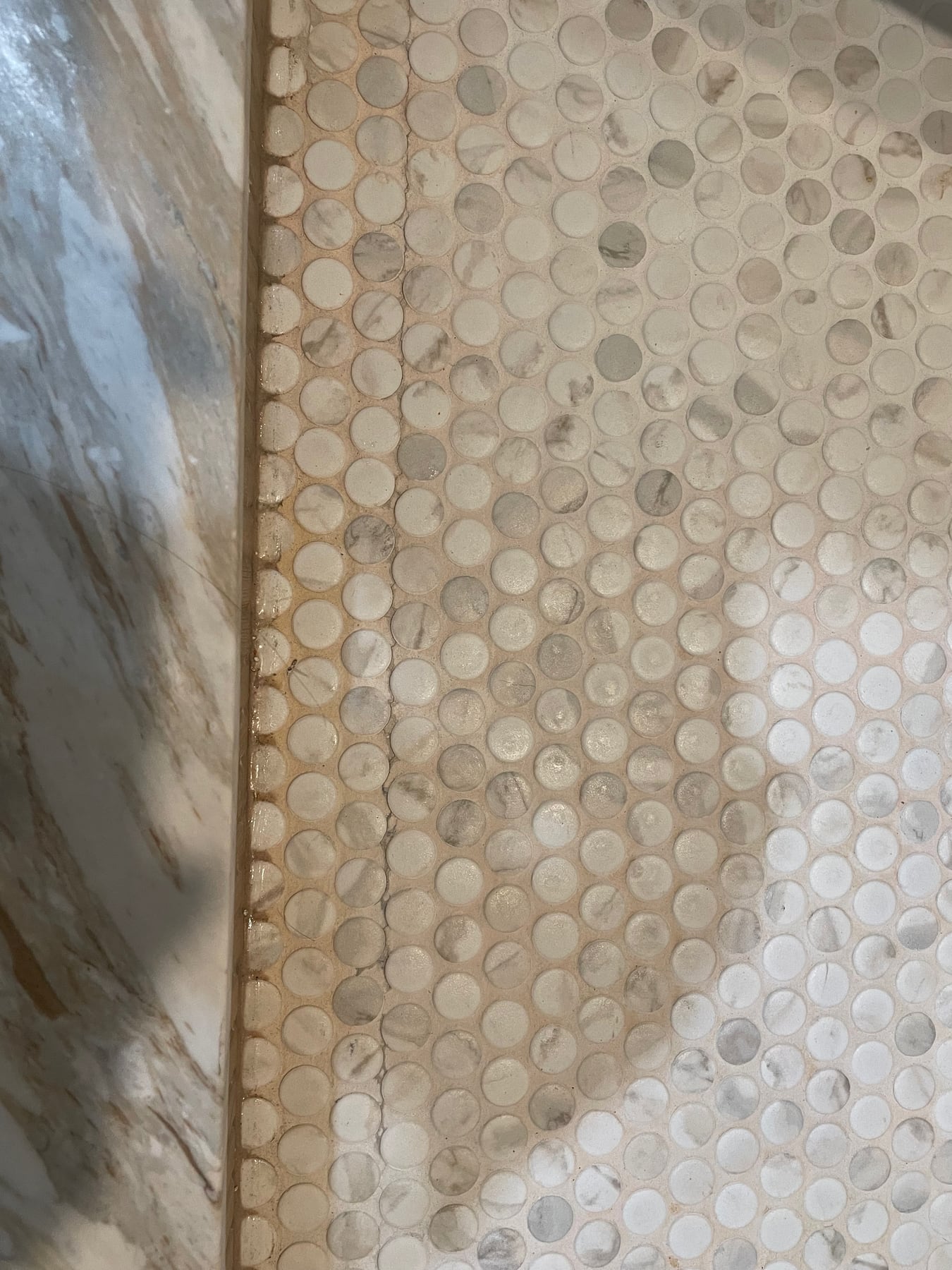
Widespread cracking was not a cosmetic grout problem. It documented movement where the substrate had been structurally compromised by improper installation.
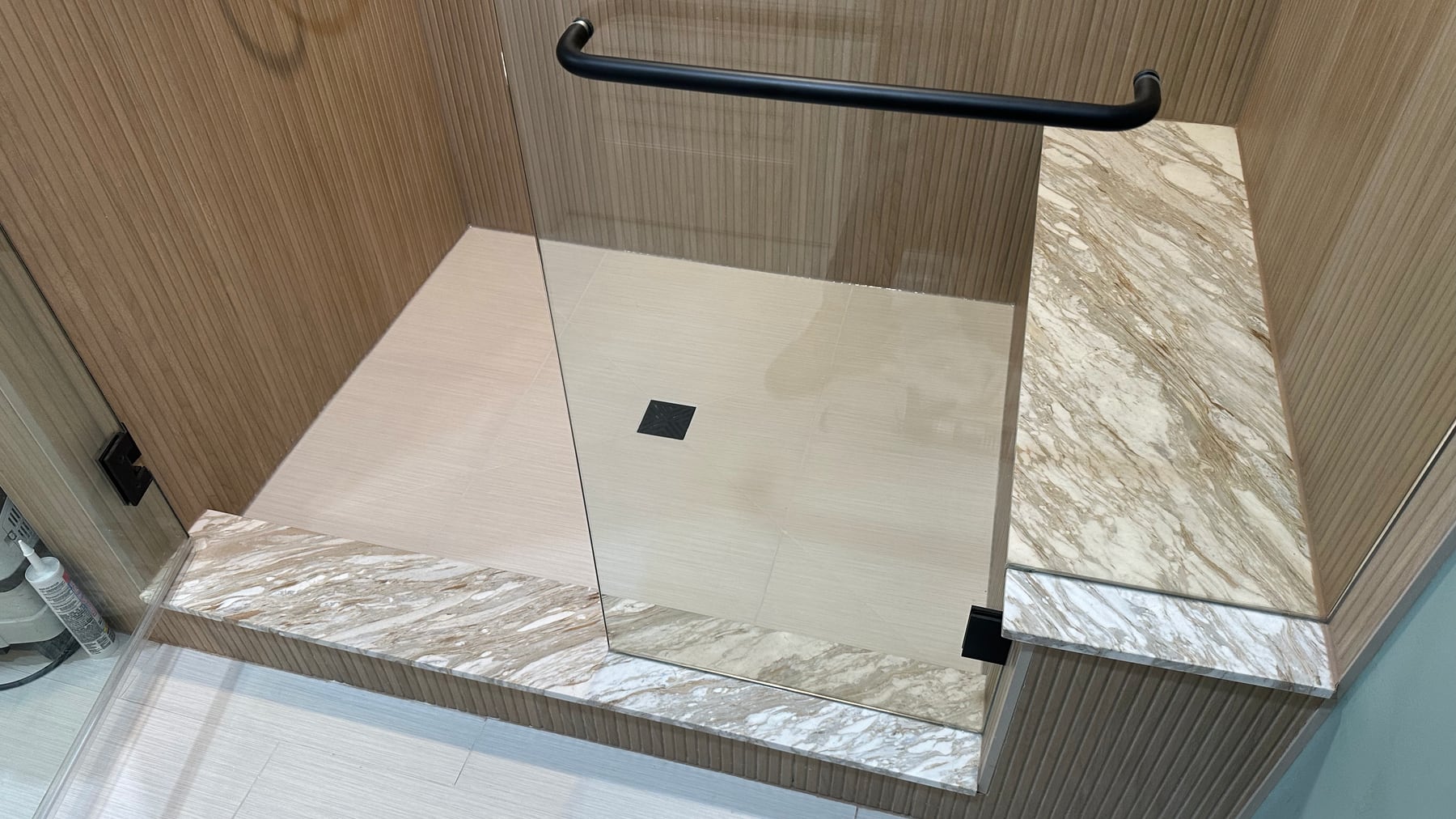
Project at a glance
| Location | Highland Park, Illinois |
|---|---|
| Project type | Failed tile shower floor repair |
| Style | Modern |
| Completed | 2025 |
A cracked shower floor can be a structural warning—not a maintenance issue
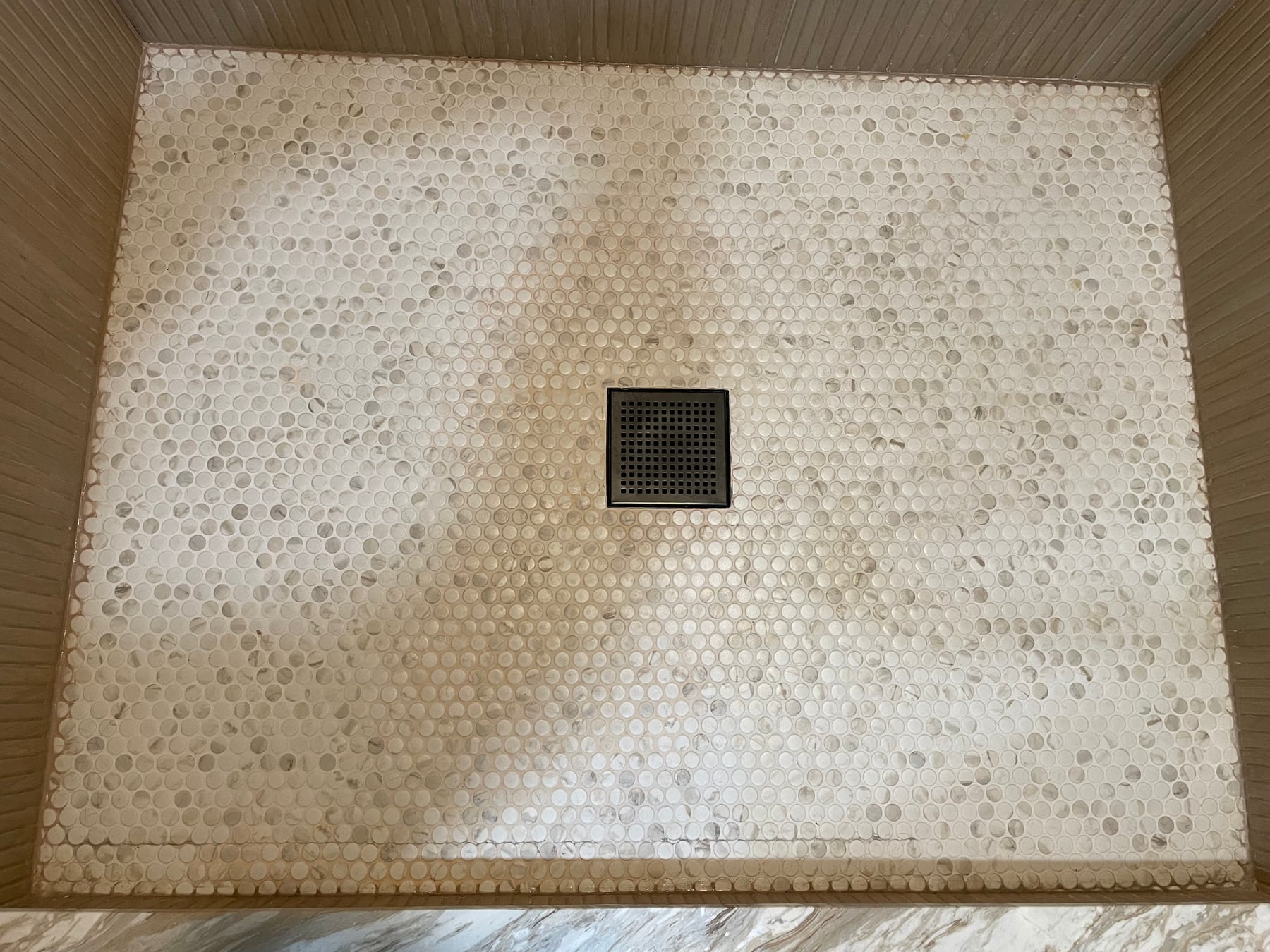
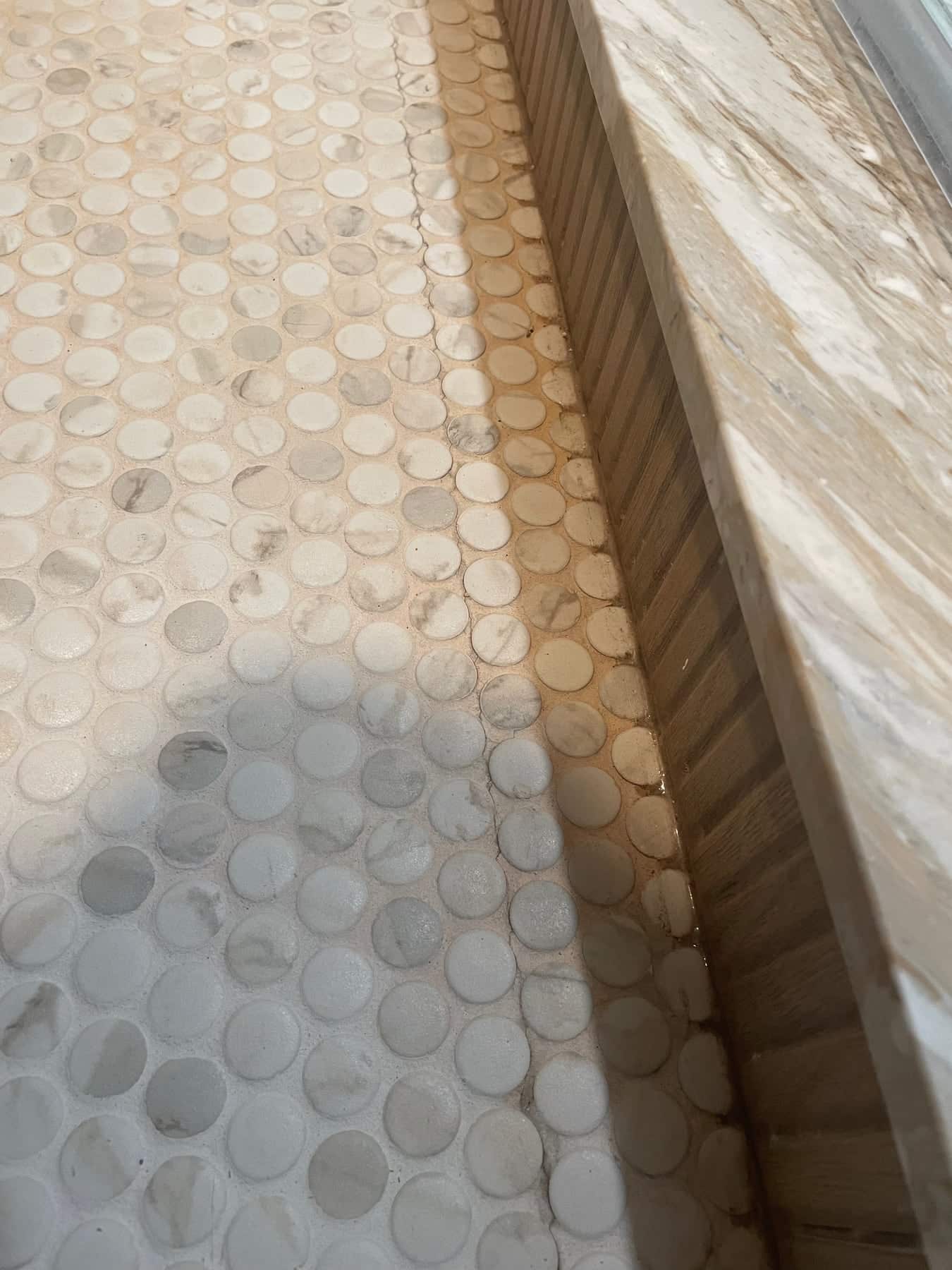
This Highland Park shower had extensive cracks through its penny-round tile and grout. The pattern showed that the assembly below the surface had been breached and was moving. Regrouting alone would have changed the appearance without correcting the failed support beneath the tile.
Cracking documented across the shower floor
Multiple views made the failure pattern clear: cracking was visible through the field and along both stone edges, including the bench transition.
Why this was not a regrouting job
Grout does not stabilize a compromised substrate. When cracking is widespread and repeats through multiple areas, replacing the visible grout can leave the underlying movement untouched.
Here, the location and continuity of the cracks pointed to improper installation and a structurally failed shower-floor assembly. The appropriate scope was selective reconstruction of the failed floor—not another surface patch and not an automatic full bathroom remodel.
Fix the assembly that failed, while preserving the parts that remain worth keeping.
The owner-led repair plan
1. Identify the failure pattern
Read the cracks as evidence of movement below the tile instead of treating them as isolated cosmetic defects.
2. Define the smallest responsible scope
Isolate the failed floor while protecting the surrounding wall tile, stone, fixtures and enclosure.
3. Reconstruct the failed assembly
Correct the compromised substrate and rebuild the tiled surface with careful layout and perimeter transitions.
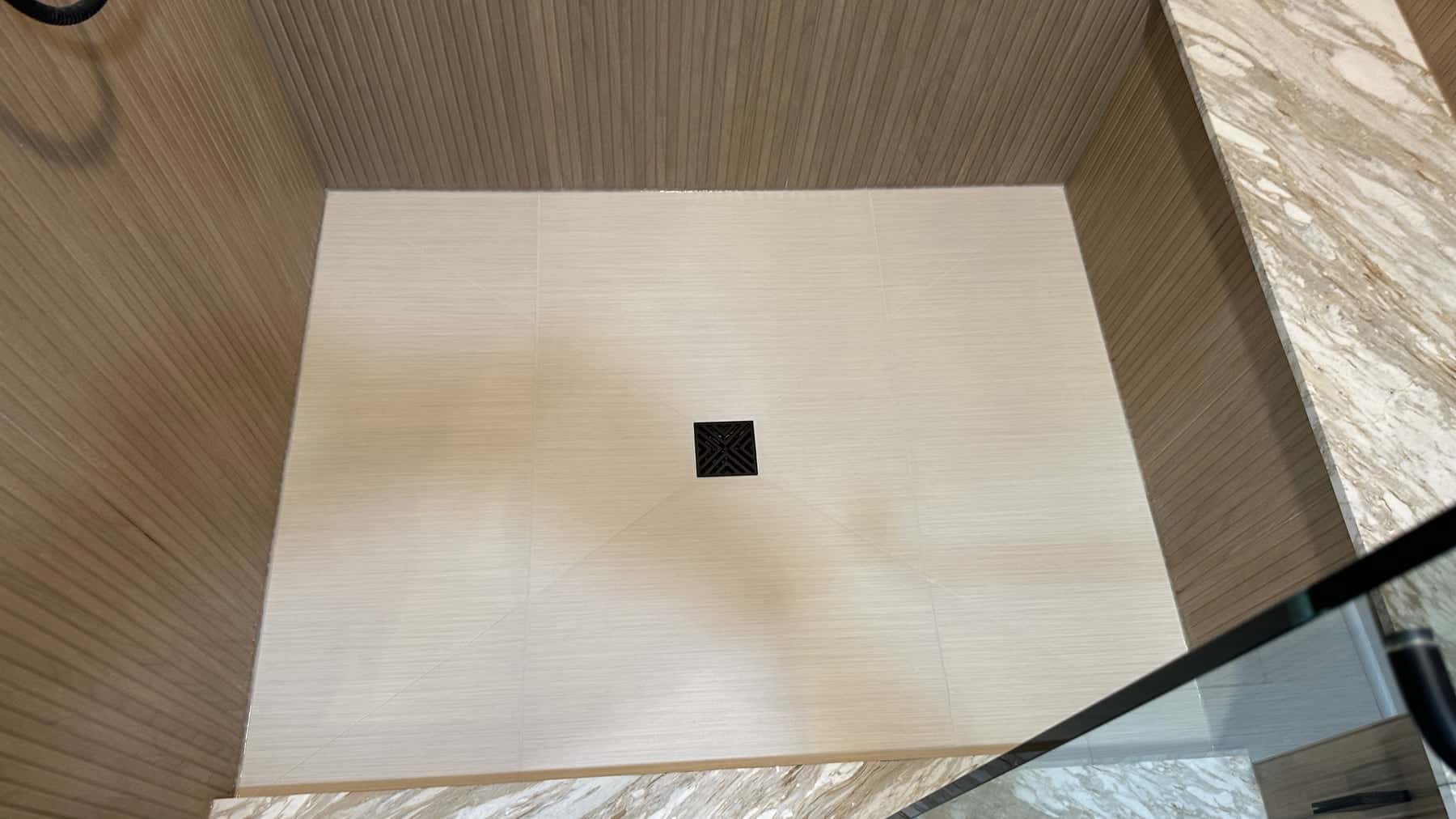
A corrected floor that still belongs to the original room
The lighter tile field complements the wood-look walls and natural stone while giving the repaired floor a clean, intentional visual identity.
Preserved
- Wood-look wall tile
- Stone bench and curb
- Black fixtures
- Glass enclosure
Corrected
- Compromised shower-floor substrate
- Cracked tile and grout field
- Floor layout and drain transition
- Perimeter finish transitions
The value was in making the right-sized correction
The homeowner did not need to sacrifice the entire modern shower to correct a failed floor. A diagnostic, owner-led approach allowed the work to focus on the structurally compromised area and preserve the surrounding finishes.
That is the distinction between a generic patch and a specialist repair plan: the scope is based on what actually failed.
Frequently asked questions
Can cracked shower grout indicate substrate failure?
Yes. Widespread or recurring cracks can be evidence of movement or a compromised substrate below the tile, especially when the cracking follows a larger pattern. The shower should be diagnosed before more grout or caulk is applied.
Does a cracked shower floor always require a full bathroom remodel?
No. When the failure can be isolated and the surrounding shower remains suitable to preserve, a specialist may be able to reconstruct the affected shower floor without remodeling the entire bathroom.
Can the walls, bench, curb and glass remain in place?
Sometimes. In this project, the failed floor was selectively reconstructed while the wood-look wall tile, stone bench and curb, black fixtures, and glass enclosure were preserved. The correct scope depends on what the on-site diagnosis finds.
Cracks that keep returning deserve a diagnosis—not another guess
Speak directly with owner Kristopher Duschen about your leaking, cracked or failed tile shower in Chicago or the North Shore. North Shore Tile & Shower Repair serves Highland Park and nearby North Shore communities, as well as Lincoln Park, Old Town, River North, Streeterville, the West Loop and Bucktown.
Call 847-446-2029 · Email Kristopher
Related resources
- Tile and shower repair in Highland Park
- Shower repair and installation
- Project gallery
- View this project on Houzz
Repair and project photography: Kristopher Duschen, owner, North Shore Tile & Shower Repair.